
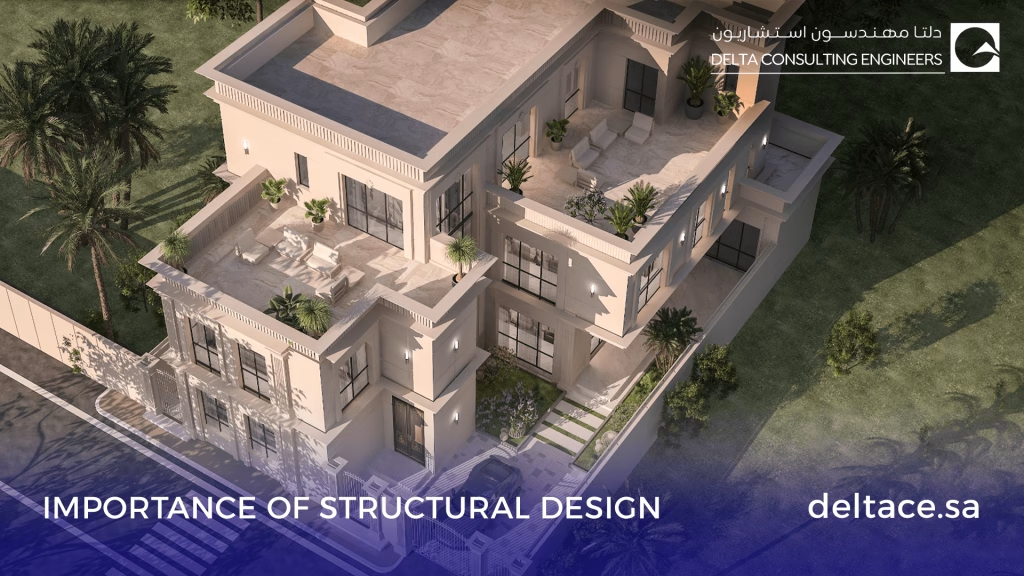
structural engineering for building safety plays a fundamental role in ensuring the stability and safety of buildings in the Kingdom of Saudi Arabia. It goes far beyond the aesthetic aspects of design and includes a detailed study and analysis of various structural loads to ensure that columns, foundations, and structural elements can withstand pressure from usage and environmental factors. This makes structural design not merely a design phase, but a long-term investment in protecting lives and property.
This article highlights the role of precise structural design in enhancing building safety and outlines the standards adopted in the Kingdom to achieve the highest levels of engineering quality and safety.
What Is Structural Engineering of Buildings?
Structural engineering is a specialized branch of civil engineering concerned with the study, analysis, and design of structural systems that support and carry different loads such as building weight, live loads, wind, and seismic forces. The goal is to ensure the safety and stability of structures.
Structural engineers rely on principles of physics, mathematics, and material science to understand how buildings can safely withstand various loads while also considering economic and environmental factors.
Their work also includes assessing the performance of structural systems—such as foundations and columns—to ensure the durability and long-term integrity of buildings, in strict compliance with the Saudi Building Code.
To better understand its scope, it is important to distinguish structural engineering from other disciplines.
Difference Between Architectural and Structural Design
Although closely related, architectural and structural design differ significantly in focus and objectives:
-
Architectural design centers on the visual and functional aspects of a building—space planning, aesthetics, ventilation, and lighting—to create comfortable and appealing environments.
-
Structural design, on the other hand, focuses on the technical and engineering aspects—ensuring that columns, foundations, and structural elements can safely carry building loads.
Structural engineers utilize advanced analysis tools to determine suitable materials and dimensions while adhering to the Saudi Building Code to ensure long-term strength and stability.
This specialization ensures maximum safety and leads us directly to the vital role of safety and risk-mitigation design.
The Importance of Safety and Risk-Mitigation Designs
Safety and risk-mitigation design is an essential part of structural engineering, helping reduce potential risks that may affect buildings and occupants. Engineers study all possible hazards and integrate preventive solutions early in the design phase to avoid incidents.
Key risks addressed include:
Fire Hazards
Often caused by electrical issues or improper storage of flammable materials. Proper design includes selecting fire-resistant materials and providing safe emergency exits.
Structural Failures
These may occur due to design errors or the use of poor-quality materials. Accurate structural analysis and proper selection of materials for columns and foundations help prevent such failures.
Leaks and Water/Gas Intrusion
Leaks can damage structural components or cause electrical hazards. Preventive design includes proper insulation and well-designed drainage systems.
Electrical Shocks
Caused by faulty or non-compliant electrical installations. Compliance with electrical safety standards in the Saudi Building Code helps mitigate these risks.
Additional Hazards
Such as slips, trips, or falling objects, which can be minimized through thoughtful planning of circulation paths and construction safety measures.
In summary, safety and risk-mitigation design is just as essential as structural analysis, ensuring the protection of lives and property while promoting sustainable building practices.
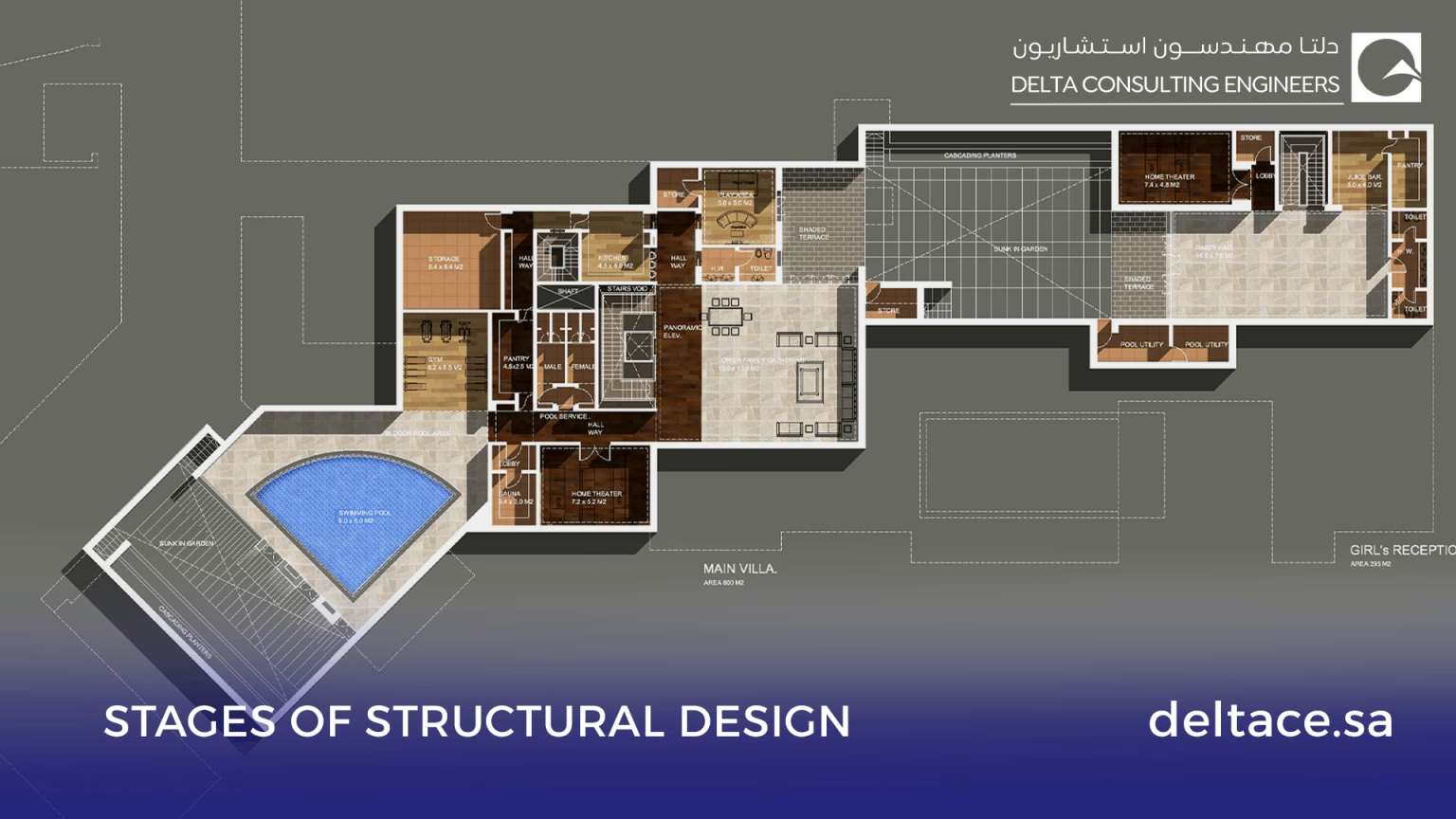
Key Stages of Structural Engineering for Building Safety
Designing and constructing a building involves several essential stages to ensure safety and longevity. These stages include:
Data Collection
This initial stage includes:
-
Studying soil type and site conditions to select the appropriate foundation system.
-
Estimating various building loads, such as dead loads, live loads, wind loads, and seismic forces.
-
Selecting structural materials according to project requirements and Saudi Building Code standards.
Structural Analysis
Engineers:
-
Use advanced analysis software to calculate load distribution and stresses on foundations and columns.
-
Verify the load-carrying capacity of each structural element.
-
Adjust the design based on analysis results to ensure maximum safety.
Construction Phase
The structural design is implemented using approved materials and strict adherence to construction drawings.
Skilled teams execute the work while safety is continuously monitored to prevent accidents.
Operation and Maintenance
After construction, regular maintenance ensures long-term structural performance. This includes:
-
Periodic safety inspections.
-
Training staff on safety procedures.
-
Updating safety systems as needed.
Through these integrated stages, structural design becomes a comprehensive process that ensures the safety, sustainability, and economic efficiency of buildings in accordance with the Saudi Building Code.
The Role of Engineering Firms in Ensuring Building Quality
Engineering consultancy firms play a vital role in safeguarding the quality and safety of buildings by providing integrated services in design, supervision, and project management.
Firms such as Delta Consulting Engineers rely on multidisciplinary teams—structural engineers, architects, and construction experts—to ensure that all project components meet Saudi Building Code requirements.
Their responsibilities include:
-
Reviewing designs before implementation.
-
Selecting suitable materials for each structural component.
-
Ensuring the durability of foundations, columns, and safety systems.
-
Supervising construction, monitoring quality, and managing risks to ensure precise execution.
-
Providing post-construction maintenance programs and regular inspections.
This makes engineering firms strategic partners in achieving excellence and long-term value in the built environment.
Conclusion
Structural engineering is the cornerstone of safe and high-quality construction in the Kingdom of Saudi Arabia. This article demonstrates that structural design is not just a technical phase, but a comprehensive process starting from data collection and ending with long-term maintenance to protect lives and property from structural failures, fire hazards, and water leaks.
By clearly distinguishing between architectural and structural design, and by applying rigorous structural analysis, engineers ensure the strength and reliability of foundations, columns, and all load-bearing elements. Engineering firms that adhere to the Saudi Building Code help ensure that every building becomes a long-term investment in safety, efficiency, and sustainability—aligned with the goals of Saudi Vision 2030.
FAQs
1. What is structural engineering for buildings?
It is a branch of civil engineering that analyzes and designs structural systems—such as foundations and columns—to safely support loads like dead loads, wind, and seismic forces.
2. What is the role of the Saudi Building Code in structural design?
The code sets essential standards that engineers must follow to ensure safe, sustainable buildings capable of resisting various environmental conditions in the Kingdom.
3. What is the difference between architectural and structural design?
Architectural design focuses on aesthetics and functionality, while structural design focuses on the technical aspects ensuring that structural elements can safely support loads.
4. How do safety and risk-mitigation designs prevent hazards?
They incorporate preventive solutions early in the design phase—such as fire-resistant materials, proper insulation, structural analysis, and safety planning—to reduce risks.
5. What are the key stages of structural design?
Data collection, structural analysis, construction, and long-term operation and maintenance.